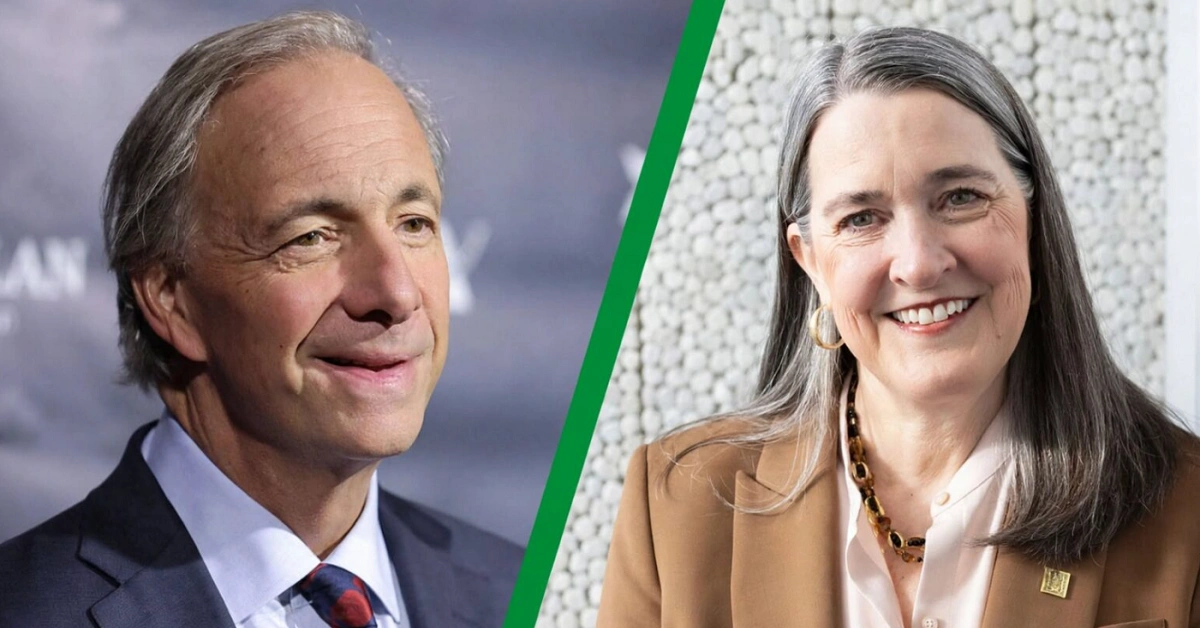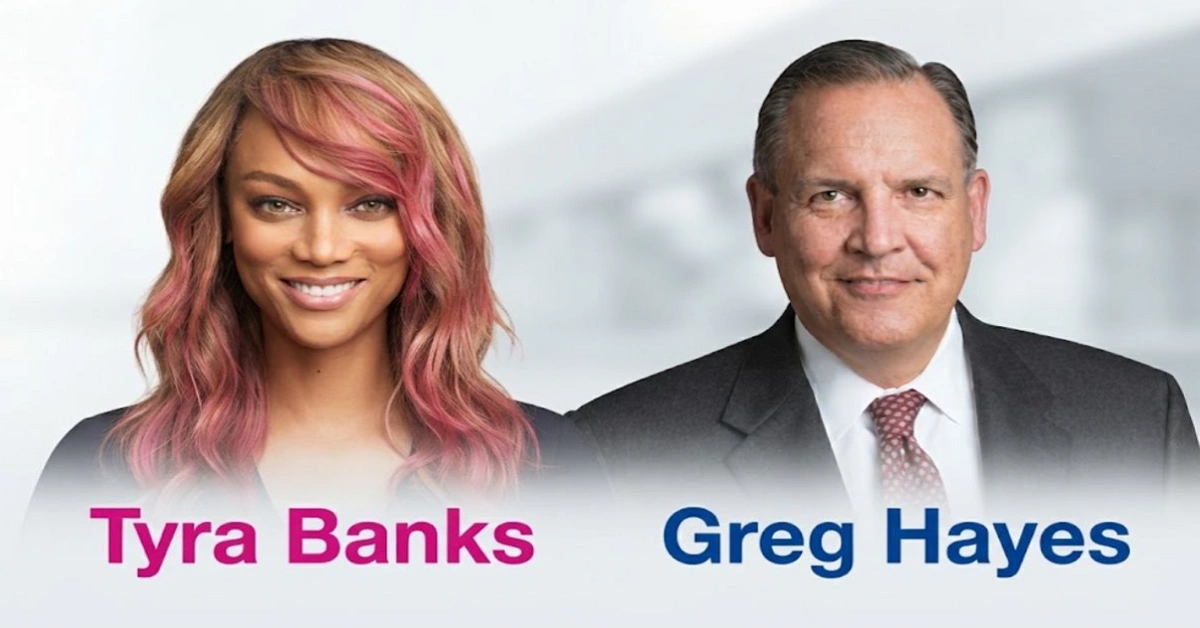
Why the Names Tyra Banks and Greg Hayes Appear Together
The search phrase “Tyra Banks and Greg Hayes” naturally sounds like it should describe a relationship, collaboration, marriage, family connection, or some other shared story. A review of current publicly available information points in another direction. The Greg Hayes most prominently associated with this search is Gregory J. Hayes, the American corporate executive whose career centered on finance, aerospace, and major industrial companies. Tyra Banks, by contrast, built her public career through modeling, television, production, beauty, entertainment, and entrepreneurship. Current searches produce several pages discussing the two names together, but those pages do not provide reliable evidence of a documented relationship between the two individuals.
That distinction matters because internet search phrases can become misleading very quickly. Once a website publishes an article containing two recognizable names, other websites may create similar pages, and the phrase can begin appearing repeatedly in search results. A reader who sees the same pairing several times may reasonably assume that there must be a story behind it. Yet repeated webpages can simply repeat the same original assumption rather than provide independent evidence. In the case of Tyra Banks and Gregory J. Hayes, authoritative corporate records document Hayes’ business career, while established entertainment reporting documents Banks’ career and personal life, but the sources reviewed do not establish a significant personal or professional connection between them.
Is There a Verified Relationship Between Tyra Banks and Greg Hayes?
Based on the public information reviewed through September 2026, there is no reliable documentation showing that Tyra Banks and Gregory J. Hayes are a married couple, romantic partners, relatives, or business collaborators. That is the central fact readers should understand before accepting claims built around the search phrase. Several recently published websites explicitly make the same distinction, noting that the two names have appeared together online without a documented relationship. However, these websites are themselves secondary sources and should not be treated as proof simply because they repeat one another. The stronger evidence comes from established reporting and official corporate biographies that independently describe each person.
It is also useful to separate “there is no public evidence” from “it is impossible that these people have ever met.” Public figures can attend the same event, know people within the same social circles, or have private interactions without those details entering the public record. Therefore, the responsible wording is that no sufficiently documented public relationship has been found in the sources reviewed. That avoids turning an absence of reporting into a claim about everything that may have happened privately. For readers researching celebrity topics, this small distinction makes a major difference: credible reporting should identify a source, event, interview, business filing, photograph, or other evidence rather than simply treating a search-engine association as a fact.
What Reliable Public Sources Show
The available reliable sources establish two separate biographies. On the corporate side, RTX records show that Gregory J. Hayes served as chairman and chief executive after the 2020 combination of Raytheon and United Technologies’ aerospace businesses. RTX announced that Christopher T. Calio became chairman effective April 30, 2025, while Hayes left the executive-chairman role and became a special adviser through January 2, 2026.
Corporate records also show that Hayes remained active beyond RTX. Phillips 66 currently lists him as its Lead Independent Director and notes that he chairs its Nominating and Governance Committee. Becton, Dickinson and Company (BD) lists Hayes as a director, and a 2026 SEC filing from BD records him among its directors. These documents are useful because they identify the specific Gregory J. Hayes associated with the search term and provide a current professional trail that is separate from the entertainment industry.
On the entertainment side, established reporting identifies Tyra Banks as a model, television personality, producer, and entrepreneur. TIME has documented the cultural impact of America’s Next Top Model, while PEOPLE has reported on Banks’ relationship with Canadian businessman Louis Bélanger-Martin. Banks has also been publicly developing and operating her ice-cream brand, SMiZE & DREAM, giving her current public profile a strong entrepreneurial dimension.
Why Lack of Evidence Matters
People sometimes assume that if a story appears on many websites, it must have been confirmed somewhere. That assumption does not hold up well on the modern internet. Search engines index pages based on many signals, and a particular keyword can become popular because publishers deliberately create content around it. In other words, ten articles repeating an unsupported premise are not equivalent to ten independent confirmations.
This is especially important for a phrase such as Tyra Banks and Greg Hayes because the names themselves encourage a relationship interpretation. One is a globally recognized entertainment figure, while the other has been a high-profile corporate executive. The contrast makes a potential connection sound intriguing, which can encourage articles, social posts, and searches even when the underlying evidence is thin. Current pages discussing the pairing generally arrive at the same conclusion: they do not have reliable evidence establishing a romantic, family, or significant professional relationship.
A careful reader should therefore ask a simple question: What is the original evidence? Without something like that, the safest interpretation is that the phrase describes an online association rather than a confirmed real-world connection. That approach does not dismiss every possibility; it simply keeps the article grounded in what can actually be documented.
Who Is Tyra Banks?
Tyra Lynne Banks is an American model, television personality, producer, and entrepreneur whose career expanded far beyond fashion. She became one of the most recognizable names in modeling and then used that visibility to build opportunities in television, production, business, writing, and other creative ventures. TIME has described Banks as a major figure associated with America’s Next Top Model, while her professional profile continues to emphasize her work as an entrepreneur and television producer.
What makes Banks especially interesting is the way her career crossed industries. Many models become known primarily for editorial work, runway appearances, or commercial campaigns. Banks built a broader public identity by moving from the runway into television and then into ownership and production. She became closely identified with America’s Next Top Model, a franchise that ran for 24 seasons and helped bring fashion competition into mainstream reality television culture. TIME describes the show as an influential reality-TV format that introduced fashion-industry language and ideas to a much wider audience.
Banks also developed a reputation for treating her name as a business platform rather than a single career title. Her projects have included production, media, writing, teaching, and consumer businesses. Her current work with SMiZE & DREAM demonstrates that pattern clearly. In a 2026 interview with The CEO Magazine, Banks discussed the brand, its Sydney flagship, and the operational details of running an ice-cream business.
Her Rise in the Modeling Industry
Banks entered professional modeling while still young and eventually became one of the industry’s most recognizable Black models. Her career included major fashion and commercial opportunities, and her professional profile highlights several milestones, including becoming the first Black model to appear on the cover of the Sports Illustrated Swimsuit Issue. She later expanded her work into television and business, turning modeling visibility into a larger entertainment and entrepreneurial career.
Her influence also became associated with discussions about representation and changing expectations in fashion. TIME’s coverage of America’s Next Top Model notes that the show gave broader audiences exposure to conversations involving beauty, identity, body image, and representation, even as the program has been criticized in later years for the way certain contestants and sensitive subjects were handled. That mixed legacy is important because Banks’ impact cannot be reduced to either praise or criticism. The show became culturally significant, and its history continues to generate debate about what reality television owed to the people appearing on screen.
Banks’ modeling career therefore serves as the foundation rather than the full explanation of her public identity. She demonstrated that a fashion career could become a launching point for media ownership, television production, branding, and entrepreneurship. That transition is one reason her name remains relevant decades after her strongest runway years. Her career shows a deliberate movement from being the subject of a brand to becoming the person building and directing brands.
Television, Production, and America’s Next Top Model
Perhaps no project is more closely associated with Tyra Banks than America’s Next Top Model. The series premiered in 2003 and eventually became a long-running global reality television franchise. Banks served as creator, host, and executive producer, helping shape the show’s visual style, judging format, storytelling approach, and public identity. TIME describes the program as a significant development in reality television because it brought the modeling world to a mass audience and turned industry concepts into entertainment.
The show’s legacy is now more complicated than its original popularity suggested. In 2026, Netflix’s Reality Check: Inside America’s Next Top Model revisited the program and examined controversies surrounding its treatment of contestants. Banks participated in the documentary process but later filed a lawsuit against Netflix and the filmmakers, alleging that her interview was selectively edited and presented in a misleading way. According to the Associated Press, Banks said she gave approximately three and a half hours of interview material, while the lawsuit alleges that roughly 16 minutes were ultimately used. Those are allegations contained in Banks’ lawsuit, not findings that have been established as fact.
The dispute illustrates how public figures can become part of an evolving historical conversation about their own work. A television program can be commercially successful in one period and later be reassessed through a different cultural lens. Banks’ response shows that she disputes the documentary’s portrayal of her, while the documentary itself represents the filmmakers’ examination of the show’s legacy. Keeping those positions separate is important when discussing the subject accurately.
Tyra Banks as an Entrepreneur
Banks’ transition into entrepreneurship is one of the clearest ways to understand her career today. Rather than remaining dependent on modeling or television appearances, she has pursued businesses built around her personality, creativity, and consumer interests. Her professional profile describes her as an entrepreneur alongside her modeling and television work, and her current focus on SMiZE & DREAM shows how strongly her business activities now shape her public identity.
This shift is significant because celebrity entrepreneurship can look simple from the outside while involving entirely different skills behind the scenes. Modeling requires presentation and visual communication. Television requires storytelling, production, scheduling, and audience engagement. Running a consumer brand adds manufacturing, logistics, retail, finance, marketing, customer experience, and product development. Banks’ recent interviews about her ice-cream company illustrate that her working life now involves practical business challenges that have little to do with a runway.
Her entrepreneurial story also helps explain why current searches about Banks can be confusing. Someone who remembers her mainly from America’s Next Top Model may not realize how extensively her career has evolved. The public image of the supermodel remains powerful, but her present-day activities include business management and brand development. That evolution gives Banks a broader professional story than the celebrity headlines often suggest.
SMiZE & DREAM and Her Business Direction
SMiZE & DREAM is an ice-cream venture founded by Banks and developed as more than a conventional frozen-dessert company. In her 2026 interview with The CEO Magazine, Banks discussed the company’s Sydney flagship at Darling Harbour and described her involvement in the day-to-day business realities of the brand, including product manufacturing and operational challenges. The brand represents a shift from Banks’ earlier media-centered ventures toward a consumer business with a physical retail presence.
The brand also reflects a recurring feature of Banks’ career: combining entertainment, personal branding, and business. Her approach has historically relied on creating recognizable experiences around her public identity. SMiZE & DREAM continues that pattern but places the customer inside a physical product environment rather than a television program. The result is a business that uses food, storytelling, branding, and visual presentation as connected parts of the same experience.
That direction also creates new challenges. An ice-cream company depends on cold-chain logistics, equipment, ingredients, retail operations, staffing, and customer demand. Banks’ discussion of a freezer compressor problem at the Sydney flagship offered a surprisingly practical look at entrepreneurship: glamorous branding does not eliminate the mundane problems of running a real business. That detail is revealing because it shows the distance between celebrity reputation and the everyday work required to keep a consumer company operating.
Tyra Banks’ Public Work in 2026
By 2026, Banks’ public profile reflects a combination of entrepreneurship, entertainment appearances, and renewed attention surrounding America’s Next Top Model. Established reporting has also covered her move toward living and working in Australia, where her ice-cream business has expanded its presence. TV Insider reported in 2025 that Banks and Louis Bélanger-Martin had moved to Australia after repeated travel connected to the production of her ice-cream business.
Another major 2026 development is Banks’ legal dispute involving Netflix’s Reality Check: Inside America’s Next Top Model. The lawsuit, filed in June 2026, alleges defamation, false light, breach of contract, and false endorsement, among other claims. AP and other established outlets reported the lawsuit and Banks’ allegations about how her documentary interview was edited. Because this is an ongoing legal matter, statements concerning fault should remain attributed to the parties rather than presented as settled findings.
There is also a modern branding question surrounding her ice-cream company. Entertainment Weekly reported that SMiZE & DREAM removed promotional images featuring AI-generated models after questions from the publication, while a representative said Banks remained committed to working with real people. This episode illustrates how Banks’ fashion background intersects with current debates about artificial intelligence, creative labor, and brand representation.
Who Is Gregory J. Hayes?
Gregory J. Hayes is an American business executive whose career is closely tied to large industrial and aerospace organizations rather than entertainment. He joined United Technologies in 1999 through its merger with Sundstrand and eventually became chief financial officer, then CEO, and later chairman. His career culminated in his leadership of the aerospace businesses that became part of RTX following the 2020 merger with Raytheon.
Hayes’ professional background is strongly financial and strategic. He holds a bachelor’s degree in economics from Purdue University and is a Certified Public Accountant. At United Technologies, he held several senior positions before becoming chief executive, giving him extensive experience with mergers, divestitures, capital allocation, corporate restructuring, and international operations. Phillips 66’s current corporate biography describes a career that included the sale of Sikorsky, the acquisition of Rockwell Collins, and the eventual formation of RTX.
The public record therefore makes it important not to confuse him with another person named Greg Hayes. “Greg Hayes” is not an especially unique name, and unrelated individuals can share it. When searching for information connected with Tyra Banks, the relevant figure appears to be Gregory J. Hayes of RTX, but the available authoritative sources do not establish that he has a personal relationship with Banks.
His United Technologies and RTX Career
Hayes spent nearly two decades at United Technologies Corporation, ultimately becoming chief executive in 2014 and chairman in 2016. During this period, UTC undertook major strategic changes, including the sale of Sikorsky Aircraft and the acquisition of Rockwell Collins. His leadership helped move UTC toward a more focused aerospace structure, according to his Phillips 66 biography.
The most consequential chapter came with the creation of RTX. Following the 2020 combination of UTC’s aerospace businesses, Pratt & Whitney and Collins Aerospace, with Raytheon, Hayes became a central figure in the leadership of the combined company. RTX later stated that he led the organization through significant changes in the aerospace and defense industry. The company reported that Christopher T. Calio succeeded Hayes as CEO in May 2024, after which Hayes became executive chairman.
Hayes then completed his transition away from RTX executive leadership. RTX announced that he would leave the executive-chairman position and board on April 30, 2025, while serving as a special adviser through January 2, 2026. That means descriptions calling Hayes the current CEO of RTX in September 2026 would be outdated. Current official corporate information instead identifies him through board and governance roles outside his former RTX executive position.
His Current Corporate Board Roles
Although Hayes is no longer the CEO or executive chairman of RTX, his corporate career has continued through board service. Phillips 66 currently identifies him as Lead Independent Director and shows him participating in several board committees. His responsibilities include chairing the Nominating and Governance Committee, demonstrating that his role has shifted from operational executive leadership toward corporate oversight and governance.
Hayes also serves on the board of Becton, Dickinson and Company, commonly known as BD. BD’s official biography says he joined its board in 2025, and 2026 corporate filings continue to list him as a director. The company describes his value to the board in terms of strategic, financial, operational, transactional, and governance experience developed over a long executive career.
This current professional information further separates Hayes’ public identity from Tyra Banks’ career. While Banks is associated with entertainment, fashion, media, and consumer products, Hayes is associated with corporate governance, aerospace, industrial strategy, and board leadership. There is nothing in the current official biographies of Phillips 66 or BD that links Hayes to Banks, just as established biographies of Banks do not identify Hayes as a collaborator.
Tyra Banks and Greg Hayes: Two Very Different Career Paths
| Category | Tyra Banks | Gregory J. Hayes |
|---|---|---|
| Primary field | Fashion, television, entertainment, entrepreneurship | Aerospace, corporate finance, business leadership |
| Best known for | Modeling and America’s Next Top Model | Leadership of United Technologies and RTX |
| Major public role | Model, host, producer, entrepreneur | Former CEO and executive chairman of RTX |
| Current documented direction | Entrepreneurship and media-related activities | Corporate board and governance roles |
| Major current business connection | SMiZE & DREAM | Phillips 66 and BD board service |
| Publicly verified connection to the other person | None established in sources reviewed | None established in sources reviewed |
Putting the two biographies side by side makes the search phrase easier to understand. Banks and Hayes became notable through entirely different professional ecosystems, and neither person’s authoritative biography identifies the other as an important part of their career. That does not mean they could never have encountered one another privately; it means there is no documented connection strong enough to support a claim that they are partners, relatives, or business collaborators.
The contrast is actually what makes the keyword interesting from an SEO and media-literacy perspective. Two famous names from unrelated industries can create a compelling headline even when there is no shared story. Readers see “Tyra Banks and Greg Hayes” and immediately wonder what happened, who dated whom, or what project brought them together. The available record instead suggests that the answer lies in online search behavior rather than a major event shared by the two individuals.
How Search Results Can Create False Connections
Search engines are designed to help users discover information, but search results do not automatically certify every association between words or people. When publishers repeatedly target a particular combination of names, that phrase can become more visible in search results. A subsequent writer may see the same phrase, assume it reflects public interest, and publish another article about it. Soon, the internet contains many pages discussing a connection that was never independently established.
This is especially common with celebrity topics because curiosity is powerful. A reader rarely searches a famous person’s name because everything is already known; they search because something seems unusual. A strange pairing such as Tyra Banks and Greg Hayes creates exactly that curiosity gap. Publishers can then fill the gap with explanations, speculation, comparisons, or summaries of other pages. The resulting ecosystem may look authoritative because of volume, even though the volume came from repetition rather than independent reporting.
A better research method is to move away from the search phrase itself and inspect primary or high-quality secondary sources. Official company biographies, court filings, established news organizations, direct interviews, and verified public statements carry more evidentiary value than a page that simply repeats another website’s wording. This principle is useful far beyond this particular keyword because the same pattern can occur with actors, athletes, business leaders, politicians, and other public figures.
Repetition Is Not the Same as Verification
One of the easiest mistakes to make online is treating repetition as proof. Suppose five websites say that two celebrities are secretly related. If all five pages copied the same claim from one another, there may still be only one underlying assertion and no independent evidence. The number five creates psychological weight, but it does not create five separate facts.
The current Tyra Banks and Greg Hayes search landscape illustrates this problem. Multiple recent pages discuss the names together, but several explicitly acknowledge that they could not establish a verified relationship. Those pages are useful for understanding why the keyword exists, yet they should not be mistaken for primary evidence. The stronger sources are the independent records that document Banks and Hayes separately.
Think of evidence like a chain rather than a pile. A pile of webpages can become taller without becoming stronger, while a chain becomes stronger when each link leads back to a trustworthy source. In this case, the chain leads to official RTX, Phillips 66, and BD records for Hayes and established entertainment reporting for Banks. Those sources provide substantial information about the two people individually, but they do not establish the shared relationship implied by the keyword.
How Readers Can Fact-Check Celebrity Claims
Fact-checking a celebrity claim does not require special software or an investigative newsroom. Start by asking what the claim actually says. Then look for a direct source that could reasonably know the information.
Another useful technique is to search both names separately. In this case, searching Tyra Banks produces extensive information about modeling, television, entrepreneurship, and her documented relationship history. Searching Gregory J. Hayes produces a corporate trail involving UTC, RTX, Phillips 66, and BD. When two independent research paths fail to converge on the alleged connection, that is a meaningful warning sign.
Finally, pay attention to wording. “According to,” “alleged,” “reported,” and “confirmed by” are not interchangeable. A lawsuit contains allegations; a company filing documents an organizational role; a celebrity interview can provide a direct statement; and a rumor page may provide nothing more than speculation. Understanding those distinctions helps readers avoid accidentally turning an internet rumor into a statement of fact.
What Is Publicly Known About Tyra Banks’ Personal Life
Tyra Banks has maintained a high public profile for decades, but her personal life is generally more private than her professional career. PEOPLE has reported that she has been in a relationship with Canadian businessman Louis Bélanger-Martin since at least 2019, and the two have made occasional public appearances together. Banks also shares her son York with former partner Erik Asla.
That existing public reporting is important when discussing the Greg Hayes question because it provides an independently documented relationship history. Established coverage does not identify Gregory J. Hayes as Banks’ partner. Instead, reporting on Banks’ personal life has consistently centered on other people, particularly Bélanger-Martin in recent years. That does not prove every detail of Banks’ private life, but it does mean claims presenting Hayes as her known partner are unsupported by the current public record reviewed for this article.
It is also important not to turn celebrity relationship reporting into an exhaustive account of someone’s private life. Public figures deserve the same basic distinction between what they choose to make public and what remains private. A responsible biography can describe documented relationships without claiming knowledge of every private interaction. In this context, the accurate statement is simply that no verified relationship between Tyra Banks and Gregory J. Hayes has been established in the sources reviewed through September 2026.
The Separate Legacies of Tyra Banks and Greg Hayes
Tyra Banks and Gregory J. Hayes have both built long careers, but the nature of their influence is dramatically different. Banks helped transform herself from a fashion model into a television creator, producer, entrepreneur, and consumer-brand founder. Her career has repeatedly crossed boundaries between entertainment and business, making her public image a central part of her professional strategy. TIME’s coverage of America’s Next Top Model highlights the program’s substantial cultural influence, while Banks’ current business interviews show how far her work has moved beyond modeling.
Hayes’ legacy sits in a different world. His professional record is built around corporate transformation, aerospace leadership, financial management, mergers, and governance. His work at United Technologies and RTX placed him in major strategic decisions involving aerospace companies, while his current roles at Phillips 66 and BD show a continuing presence in corporate boards.
Seen this way, the two names do not require a hidden story to be interesting. They represent two distinct models of professional success. Banks built cultural influence through visibility, creativity, entertainment, and entrepreneurship. Hayes built institutional influence through corporate leadership, finance, strategy, and governance. Their careers may be worth examining side by side, but the public evidence does not provide a documented shared relationship that connects their biographies.
Conclusion
The phrase “Tyra Banks and Greg Hayes” may suggest a celebrity relationship, partnership, or shared history, but the current public record does not establish such a connection. The Greg Hayes most clearly associated with the search phrase is Gregory J. Hayes, the former United Technologies and RTX executive who now holds corporate board roles, including positions with Phillips 66 and Becton, Dickinson and Company. Tyra Banks remains a major figure in fashion, television, entertainment, and entrepreneurship, with SMiZE & DREAM representing an important part of her current business direction.
FAQs
1. Are Tyra Banks and Greg Hayes married?
No verified public source reviewed through September 2026 identifies Tyra Banks and Gregory J. Hayes as married. The available reporting on Banks’ personal life identifies Canadian businessman Louis Bélanger-Martin as her longtime partner, while corporate sources document Hayes’ professional career separately.
2. Who is Greg Hayes associated with Tyra Banks searches?
The Greg Hayes most commonly connected with the search phrase appears to be Gregory J. Hayes, a former CEO and executive chairman of RTX. He previously held senior leadership roles at United Technologies and currently serves in corporate board positions including Phillips 66 and BD.
3. Did Tyra Banks and Greg Hayes work together?
There is no documented major business collaboration between Tyra Banks and Gregory J. Hayes in the reliable sources reviewed. Their established professional histories are in different industries, with Banks focused on entertainment and entrepreneurship and Hayes focused on aerospace and corporate governance.
4. Why do Tyra Banks and Greg Hayes appear together online?
The precise original cause of the search pairing is not established by an authoritative source. Several recent websites discuss the phrase as an online association and conclude that it does not correspond to a verified relationship. This appears to be a case where search-driven publishing may have amplified an unusual combination of names.
5. What is Tyra Banks doing now?
Banks has continued her entrepreneurial work, particularly through SMiZE & DREAM, her ice-cream company with a Sydney flagship.